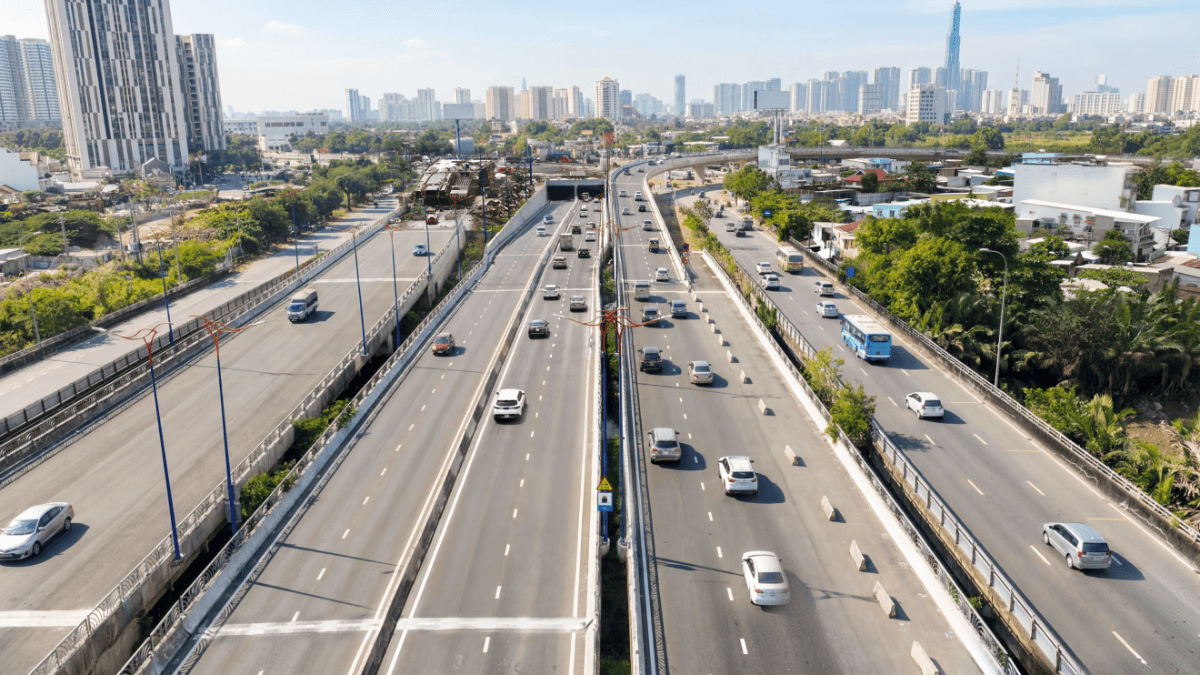
More than mere urban planning, the simultaneous construction of major core infrastructure and the formation of new functional centers are creating powerful growth momentum. As a result, eastern Ho Chi Minh City is rising as a focal point where investment capital concentrates — leaping into a region with internationally standard living conditions and fundamentally reshaping the city's overall profile.
Major traffic bottlenecks finally being broken
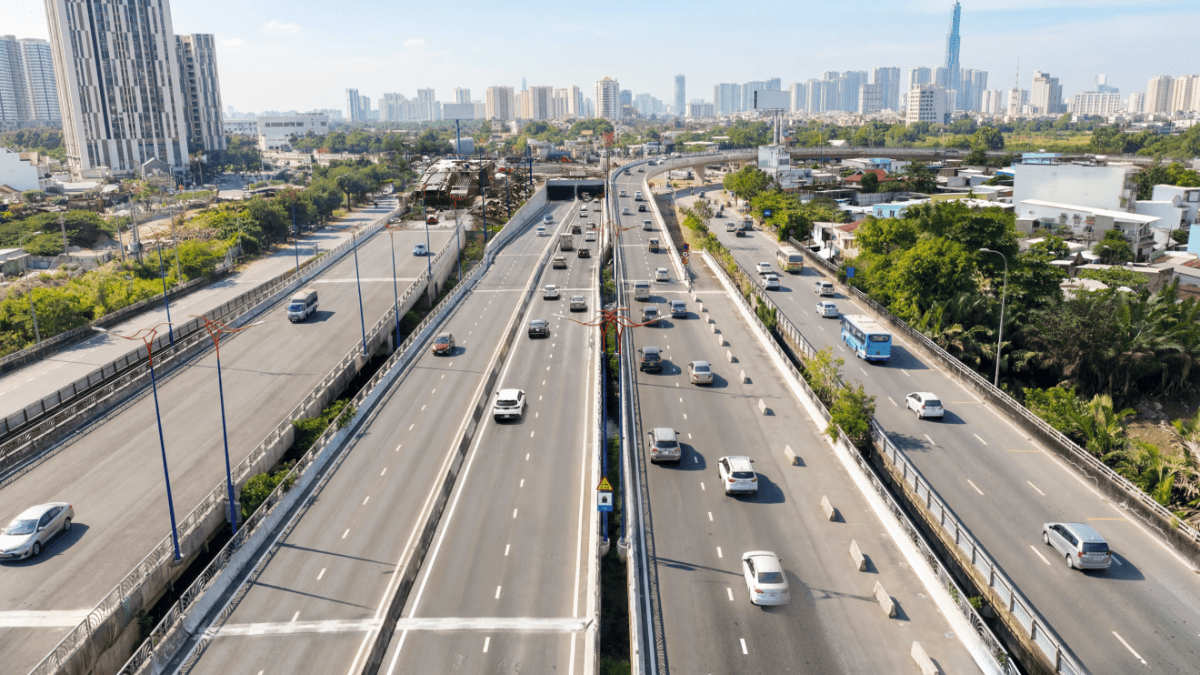
Located at the eastern gateway of Ho Chi Minh City, the An Phu intersection — with a total investment of about VND 340.8 billion — is rated as one of the most critical traffic nodes. The project recently hit an important milestone with the official opening of underpasses HC1-01 and HC1-02, and the full works are slated for completion in Q2 2026.
About 5 km away lies the My Thuy intersection — a logistics hub directly connected to Cat Lai Port — under construction as of March 2026. With a total investment of around VND 360 billion, the project is expected to separate heavy-truck traffic from general traffic, speeding up logistics and container movement while improving road safety for local residents and minimizing congestion and collisions.
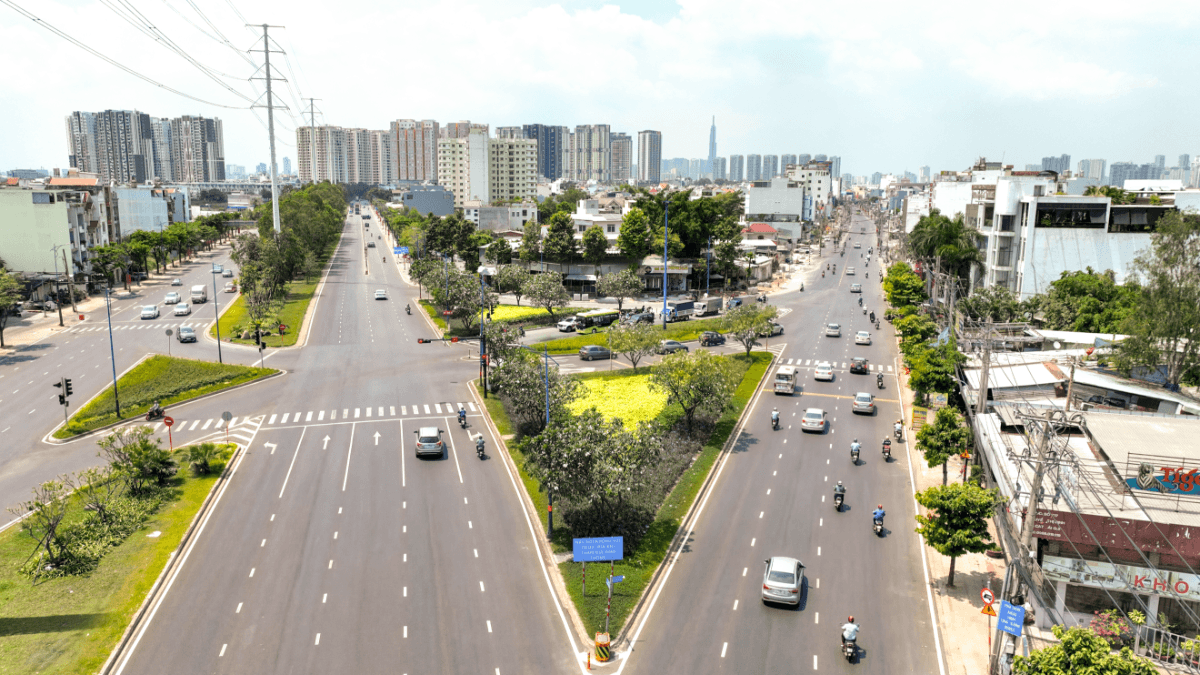
To complement the intersection system, an expansion of Nguyen Thi Dinh Road is underway, dramatically lifting the capacity of the key axis connecting ports, expressways and residential areas. Through linkages with elevated roads and supporting infrastructure, logistics flows are also being smoothed — elevating eastern Ho Chi Minh City into a strategic logistics axis for the Southern Key Economic Region.
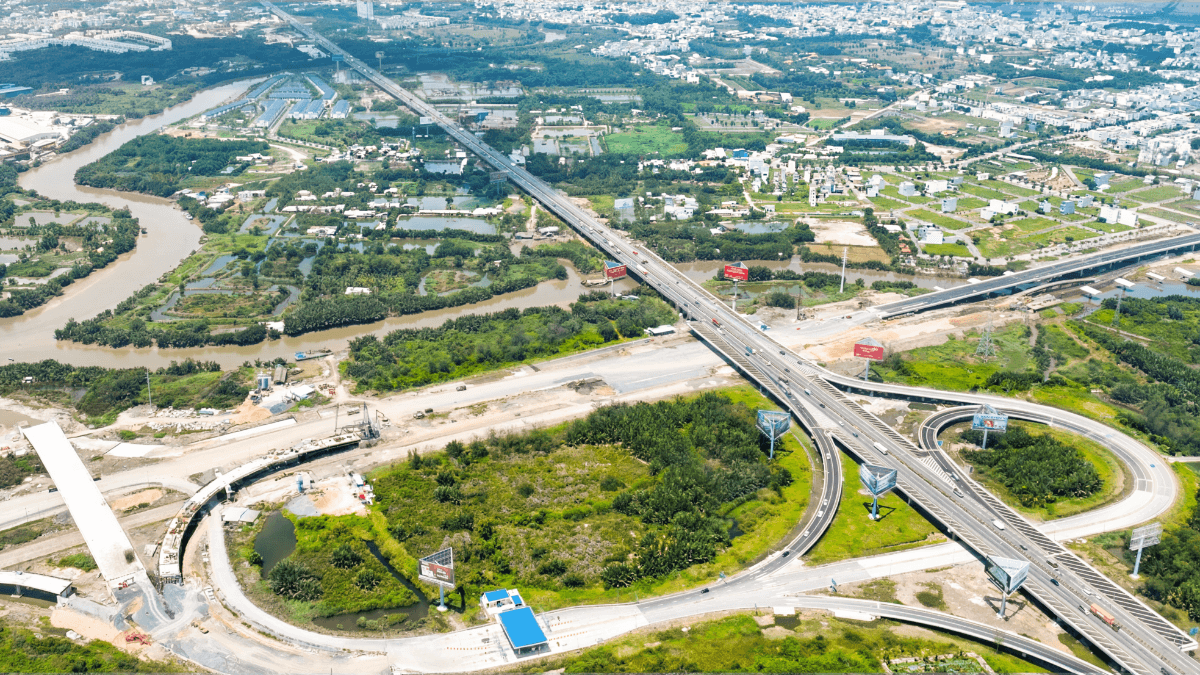
At the regional level, Ho Chi Minh City's Ring Road 3 is being expanded from the existing 4 lanes to 8-lane expressway standards, targeting full opening before June 30, 2026.
Once complete, Ring Road 3 will connect with five radial expressways — HCMC–Trung Luong, HCMC–Long Thanh–Dau Giay, Ben Luc–Long Thanh, HCMC–Moc Bai and HCMC–Thu Dau Mot (under construction) — forming a core transport axis that ties the entire Southeast region together.
Beyond easing congestion and cutting travel times and logistics costs, this corridor is expected to create new development space, form industrial–logistics corridors and enable efficient connections with the port system.
Notably, beyond roads, eastern Ho Chi Minh City is one of the core areas served by the most urban-rail lines. Metro Line 1 (Ben Thanh–Suoi Tien) is already running steadily; by 2030, multiple additional lines are planned, including Ben Thanh–Thu Thiem (part of Metro Line 2), Thu Thiem–Long Thanh, Tan Son Nhat–Phu Huu, and the Binh Duong new-city extension of Metro Line 1.
In particular, the Metro Line 7 segment connecting from Thu Thiem Bridge 4 is being repositioned with adjusted routes and station locations to provide direct access to the new political-administrative center of HCMC, planned for the eastern area. At the national-rail level, the terminus station of the North–South high-speed railway is also planned for this area.
With this multi-layered transport network — expressways, ring roads and urban rail — being built simultaneously, eastern Ho Chi Minh City has acquired highly interconnected infrastructure and is set to enter a new phase of growth.
The Global City and The Rivus emerge as pivotal anchors reshaping the urban fabric of eastern HCMC
Against this backdrop, The Global City is drawing attention as the flagship new urban district representing the eastern area, thanks to its strategic location and systematic urban planning. The opening of Lien Phuong Road, in particular, marks a major turning point in connectivity — cutting travel time from the High-Tech Park and Thao Dien to The Global City to around five minutes.
The Global City is steadily positioning itself as an iconic center, with excellent access to key destinations such as the Thu Thiem administrative center, the Sai Gon central area and Long Thanh International Airport. As a result, it is growing into a central hub offering high mobility convenience to both residents and visitors.
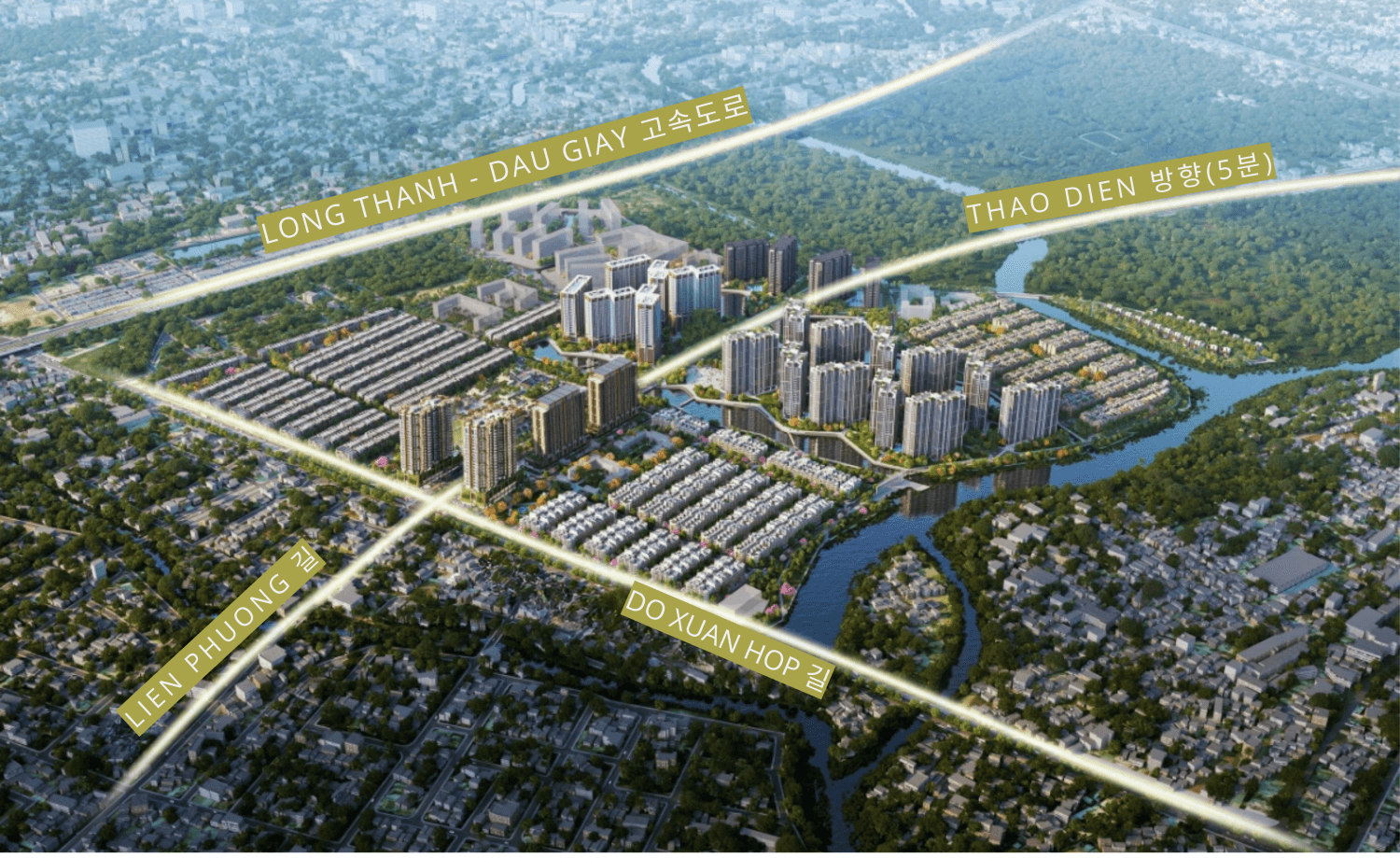
Matching its level of existing infrastructure, The Global City is an internationally styled new urban area designed around the philosophy of a 'people-centered city.' Its systematically planned integrated urban model allows every aspect of life — work, leisure, education, healthcare — to be reached within a 15-minute walk, optimizing travel time efficiently.
Here the amenity ecosystem combines scenery, entertainment and community activities in an organic way. 'The Global Fountain' and 'Love Bay' offer emotionally rich waterscape spaces — landmarks providing relaxation and tranquility for residents and visitors alike. Meanwhile, 'City Park' serves as a space for diverse outdoor activities and events, emerging as a flagship destination offering Ho Chi Minh City residents a vibrant leisure culture.
In parallel, the high-end branded villa enclave 'The Rivus' — located next to The Global City — is drawing attention as a new landmark of the eastern area. With its strategic location adjacent to core infrastructure such as Long Thanh International Airport, Ring Road 3 and the Bien Hoa–Vung Tau Expressway, The Rivus is rated as having a rare site profile symbolized in feng shui terms as 'twin dragons playing with a pearl' and 'auspicious site facing water' — interpreted as a place where the energies of prosperity and growth converge.
Inside The Rivus, the marina is a rare piece of premium infrastructure even within Vietnam, designed to international standards with cutting-edge vessel systems and lift equipment. As the country's first compound-internal exclusive marina facility, it delivers a differentiated value proposition.
Once the transport infrastructure is fully in place, eastern Ho Chi Minh City is expected to take its place as a new connectivity hub and grow into a core axis where economic flows converge. It is also being evaluated as a region offering asset value appreciation and long-term investment stability.
Amid this development wave, large-scale projects such as The Global City and The Rivus are reshaping HCMC's urban fabric and helping to elevate its international stature. Developed by Masterise Homes, the two projects each carry distinct concepts but are aligned with the city's strategy of becoming one of the 'world's top 100 cities' by 2030 — growing into an innovation ecosystem and a high-income city. Looking further ahead, by 2045 the city aims to reach the global top 100 and develop into a global megacity representing Southeast Asia.
Want a deeper market briefing?
Our research desk publishes a 40-page quarterly Vietnam Real Estate Brief. Free for qualified investors.
Request the briefMore articles
All news Indochine News
Gladia Heights: What Foreign Buyers Should Check Before Investing in Vo Chi Cong Binh Trung Thu Duc City
Updated: June 2026 Yes, foreigners can legally purchase and own residential apartments at Gladia Heights in Thu Duc City for a 50-year term, which is renewab
Read article Market News
Why Eastern Ho Chi Minh City real estate is so in demand
Metro extensions, the Thu Thiem new urban area and ring-road completions are turning HCMC East into the most investable submarket for foreign buyers.
Read article Indochine News
INDOCHINE achieves major success as northern master distributor of Happy One Mori
Happy One Mori books 98% sell-out — confirming INDOCHINE's foothold in the North on the back of strong end-user demand and clear value.
Read articleThe essentials every foreign buyer should read before reserving.