Largest urban development in Da Nang’s Northwest. A vibrant living–shopping–leisure destination with strong investment potential and modern city infrastructure.
This 'changing of the guard' isn't just a geographic shift — it's a reorganisation of value, in which real estate is no longer just a place to live or rest, but a sustainable investment vehicle tied to macroeconomic growth.
Lien Chieu — Da Nang's new growth pillar
Da Nang has long been known as a vibrant tourism city — the Han River corridor's coastal resorts and luxury developments give the picture of prosperity. But on the back of an International Financial Centre (IFC) and a next-generation Free Trade Zone (FTZ), Da Nang is preparing a historic 'great transition.' Investment flows are no longer concentrated in the traditional centre — they're broadening into a new growth engine, the north-west gateway.
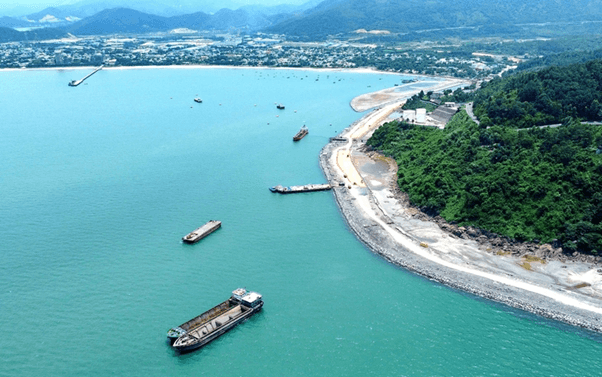
Da Nang historically developed around tourism services. Now, the city's north-west — particularly Lien Chieu District — is being planned as the new growth pole. Lien Chieu was chosen as the centre of the free-trade zone for a reason: the area combines three core elements — Lien Chieu deep-sea port, the industrial / high-tech district, and the International Financial Centre — into a powerful growth pole.
Experts call this a solid triangular relationship — supplying the momentum for outstanding development. The Lien Chieu port becomes an international trade gateway; the high-tech zone acts as the 'magnet' pulling in talent; and the International Financial Centre serves as the region's economic brain. The large-scale plan's ripple effects shape a 'transformative space' across the economy — particularly across the property sector.
Lien Chieu in particular aims to become a 'mini Silicon Valley' — bringing together the high-tech zone and the international community of professionals, engineers and knowledge workers. The modern transit infrastructure is being completed step by step, setting the stage for the area to rise as Da Nang's new economic, commercial and financial centre alongside the old core districts.
The impact of planning and reshuffling on the property market
Establishing the International Financial Centre alongside tax and trade incentives will transform the north-west into Da Nang's 'golden gateway.' Real estate here is no longer just living space — it's a strategic investment vehicle.
Experts affirm this shift will reshape the city's property landscape. Investment that had concentrated along the Han River and My Khe Beach will spread to Lien Chieu — where new development drivers converge, and where infrastructure, population and economic growth combine to deliver more sustainable price-upside margins.
Yet this rapid development has also exposed bottlenecks. With roughly 220,000 residents — making it Da Nang's most densely populated district — and tens of thousands of professionals and high-skill workers expected to arrive in the near future, Lien Chieu's urban fabric and real-estate supply aren't keeping pace. The dominant residential supply is land and small townhouses. The whole district has only a handful of apartment complexes — and lacks the systematic urban planning and public facilities required to host a population demanding high quality of life.
Faced with the enormous demand from organic population growth and the 'brain' inflow, modern and convenient urban development becomes an inevitable and urgent trend. This supply gap is an excellent opportunity for investors with strategic vision — those who recognise the market's potential and its thirst for high-quality product. The gap between demand and supply has created a wide margin and a perfect window for well-planned projects with the standing of a new city symbol.
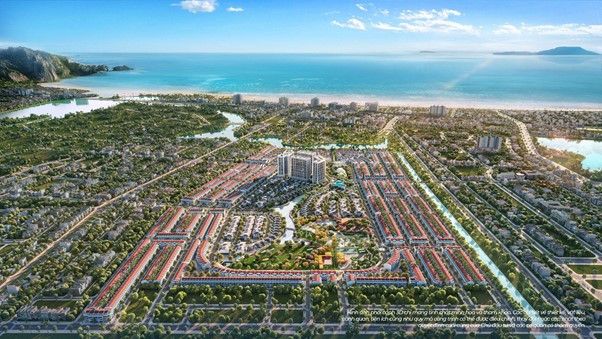
Against this backdrop, the emergence of Lumia Da Nang Metropolis is seen as a solution to the north-west's real-estate 'thirst.' The project isn't just residential space — it brings vibrant shopping, lifestyle and entertainment spaces, helping complete Lien Chieu's unfinished urban landscape.
Developed by Saigon Da Nang Investment Joint Stock Company — a Kinh Bac Group subsidiary owned by Dang Thanh Tam — Lumia Da Nang has positioned itself as the area's largest residential, leisure and resort city. In Phase 1 the developer released a low-rise townhouse fund at the urban core — starting from $6 million/m² — promising customers across the country residential and investment opportunity at the heart of the city.
With the arrival of large-scale projects like Lumia Da Nang, the city's north-west is steadily securing its standing as a fresh, vibrant and refined new centre — developing alongside the old core to shape a modern, dynamic Da Nang.
Want a deeper market briefing?
Our research desk publishes a 40-page quarterly Vietnam Real Estate Brief. Free for qualified investors.
Request the briefMore articles
All news Indochine News
Gladia Heights: What Foreign Buyers Should Check Before Investing in Vo Chi Cong Binh Trung Thu Duc City
Updated: June 2026 Yes, foreigners can legally purchase and own residential apartments at Gladia Heights in Thu Duc City for a 50-year term, which is renewab
Read article Market News
Why Eastern Ho Chi Minh City real estate is so in demand
Metro extensions, the Thu Thiem new urban area and ring-road completions are turning HCMC East into the most investable submarket for foreign buyers.
Read article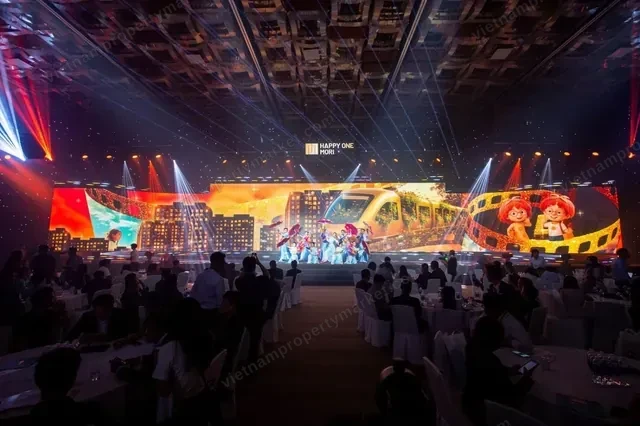 Indochine News
INDOCHINE achieves major success as northern master distributor of Happy One Mori
Happy One Mori books 98% sell-out — confirming INDOCHINE's foothold in the North on the back of strong end-user demand and clear value.
Read articleThe essentials every foreign buyer should read before reserving.