Daily Market Digest — 2026-05-23: Vietnam Property Market Update
The Daily Market Digest — 2026-05-23 delivers a concise, data-led Vietnam property market update for international investors tracking HCMC apartment prices, Hanoi residential outlook, FDI real estate Vietnam trends, condo absorption rates, and the 2026 property forecast for Vietnam.
Today’s signal: constructive, selective. Liquidity is improving in core urban corridors, apartment prices remain resilient in prime districts, and foreign-capital confidence continues to support premium and mid-premium housing. Rate sensitivity, release pacing, legal clarity, and end-user depth remain critical, especially in outer-ring submarkets.
Vietnam Real Estate Market Snapshot — Key Figures
- GDP growth trend: Vietnam growth assumptions hold near 6.1%–6.8%, supporting residential demand in employment-led metros.
- FDI momentum: Registered FDI tracks around USD 12–15 billion YTD; real-estate-related allocation estimated at 12%–18%.
- New apartment supply: Hanoi and HCMC launches run at 18,000–24,000 units annualised, mainly phased releases.
- Vietnam condo absorption rate: First-phase take-up averages 55%–70%; transit-connected master plans outperform.
- Apartment price growth: Core districts rise around 4%–9% YoY; peripheral districts show 1%–6% YoY.
Macro Outlook: GDP, FDI, Mortgage Rates, FX
Vietnam residential real estate remains supported by export diversification, domestic consumption recovery, and infrastructure-led productivity gains. A planning range of 6.1%–6.8% GDP growth underpins housing demand from an expanding urban middle-income base.
FDI real estate Vietnam remains a key confidence driver. Stable multinational inflows support tenant demand, executive relocation, and service-sector growth. Higher-value manufacturing, technology assembly, and logistics-led investment favor districts with strong arterial access and proximity to employment clusters.
Mortgage conditions remain steady-to-accommodative versus prior tightening phases. Qualified borrowers generally see effective pricing in an illustrative 8.0%–10.5% band, depending on tenor and promotional structure. Result: better end-user conversion, provided payment schedules remain realistic.
FX volatility is contained. Orderly VND/USD movement reduces entry friction for offshore investors and supports longer-hold underwriting. Conservative FX assumptions still belong in downside scenarios.
Vietnam Apartment Supply: Hanoi and HCMC Launch Pipeline
Supply is normalising through phased project launches, not broad inventory dumping. Across Hanoi and HCMC, annualised new supply is estimated at 18,000–24,000 units. Developers continue to protect pricing integrity through controlled release velocity.
In HCMC, new stock clusters in eastern growth corridors, especially Thu Duc and river-linked zones. Infrastructure upgrades, mixed-use ecosystems, and lifestyle amenities support both owner-occupier and investor demand.
In Hanoi, supply concentrates in western and northern expansion belts, particularly around ring-road access and future transit connectivity. Integrated townships, amenity density, staged handovers, and professional management remain decisive.
Outperformers: projects with clear legal documentation, credible developers, institutional maintenance standards, and real post-handover rental depth.
Demand and Absorption: Mid-Premium Apartments Lead
Demand is recovering selectively. First-phase absorption sits around 55%–70%, with premium and upper-mid projects in connected districts leading the market. Strongest conversion appears where developer credibility, efficient layouts, transit access, and livability align.
The leading segment: mid-premium urban apartments. Buyers are upwardly mobile professionals, families, and investors seeking long-term livability, rental resilience, and liquidity. Ultra-luxury still transacts, but velocity depends heavily on brand strength. Entry-level demand persists in peripheral nodes, though affordability and commute sensitivity cap absorption.
Investor demand is returning, especially where rental yield compression may precede full cycle recovery. Central and near-central zones offer more stable gross yields and lower vacancy risk than distant outer districts.
HCMC Apartment Prices vs Hanoi Apartment Prices
| City | District / Area | Estimated Primary Price Range (USD/sqm) | YoY Change | Market Note |
|---|---|---|---|---|
| HCMC | Thu Duc | 3,200–5,200 | +5% to +9% | Infrastructure-led demand; strong premium liquidity. |
| HCMC | District 7 | 2,900–4,600 | +3% to +7% | Mature expat rental base; selective new supply. |
| HCMC | Binh Thanh | 3,400–5,800 | +4% to +8% | Near-core access supports liquidity and rentability. |
| Hanoi | Cau Giay | 2,800–4,500 | +4% to +7% | Office-led demand; established services. |
| Hanoi | Nam Tu Liem | 2,500–4,200 | +3% to +6% | Family end-user depth supports absorption. |
| Hanoi | Gia Lam | 2,000–3,400 | +2% to +5% | Upside tied to infrastructure execution. |
Hanoi vs HCMC: HCMC retains a higher absolute pricing premium in near-core and riverfront-connected districts. Hanoi offers broader value entry for investors targeting medium-term appreciation. In both cities, transit-linked micro-locations are pulling ahead of less connected inventory.
2026 Property Forecast Vietnam: Bull, Base, Bear
Bull Case
Stronger credit transmission, sustained FDI acceleration, and on-time infrastructure delivery → absorption near 70%–78%. Leading districts could see 8%–12% annual price growth. Premium corridor projects outperform.
Base Case
Stable macro growth, manageable rates, phased supply discipline → absorption around 58%–68%. Core and near-core prices rise 4%–7%; outer zones gain 2%–5%. Stock selection drives returns.
Bear Case
External demand softness, delayed infrastructure, tighter credit → absorption softens to 45%–55%. Price growth flattens to 0%–3%; discounts appear in peripheral submarkets. Defensive picks: completed units in proven rental locations.
Top Investment Areas in Vietnam Real Estate
Thu Duc, HCMC — transit-linked master-planned clusters: Best for liquidity, tenant depth, and medium-term capital growth. Infrastructure connectivity and lifestyle amenities support resale and leasing.
Nam Tu Liem, Hanoi — modern urban inventory: Strong family demand, civic infrastructure, and practical commuting. Reputable developers with full-service facilities remain well positioned.
District 7, HCMC — mature rental ecosystem: Defensive yield play. International schools, retail, and established expat demand support occupancy consistency.
Selection filter: legal clarity, delivery track record, realistic payment terms, professional management, and genuine end-user demand. In this cycle, execution beats speculation.
Subscribe for Vietnam Property Market Intelligence
Subscribe to Vietnam Property Market for the Daily Market Digest, district-level apartment price trackers, project due diligence snapshots, FDI real estate Vietnam insights, absorption-rate updates, and scenario-based investment guidance for international buyers.
Get sharper data before major launch waves. Move faster. Underwrite better. Buy with confidence.
Note: All figures are illustrative ranges for market analysis only. Validate against live transactions, developer disclosures, legal documentation, and professional advice before investment.

Want a deeper market briefing?
Our research desk publishes a 40-page quarterly Vietnam Real Estate Brief. Free for qualified investors.
Request the briefMore articles
All news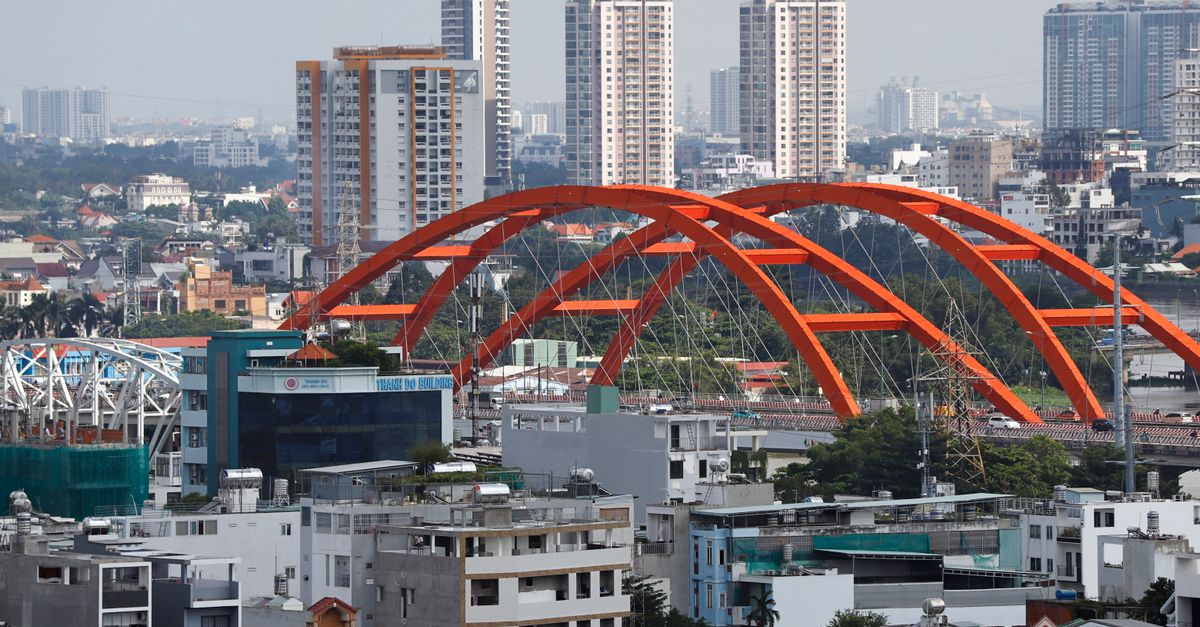 Indochine News
Gladia Heights: What Foreign Buyers Should Check Before Investing in Vo Chi Cong Binh Trung Thu Duc City
Updated: June 2026 Yes, foreigners can legally purchase and own residential apartments at Gladia Heights in Thu Duc City for a 50-year term, which is renewab
Read article Market News
Why Eastern Ho Chi Minh City real estate is so in demand
Metro extensions, the Thu Thiem new urban area and ring-road completions are turning HCMC East into the most investable submarket for foreign buyers.
Read article Indochine News
INDOCHINE achieves major success as northern master distributor of Happy One Mori
Happy One Mori books 98% sell-out — confirming INDOCHINE's foothold in the North on the back of strong end-user demand and clear value.
Read articleThe essentials every foreign buyer should read before reserving.