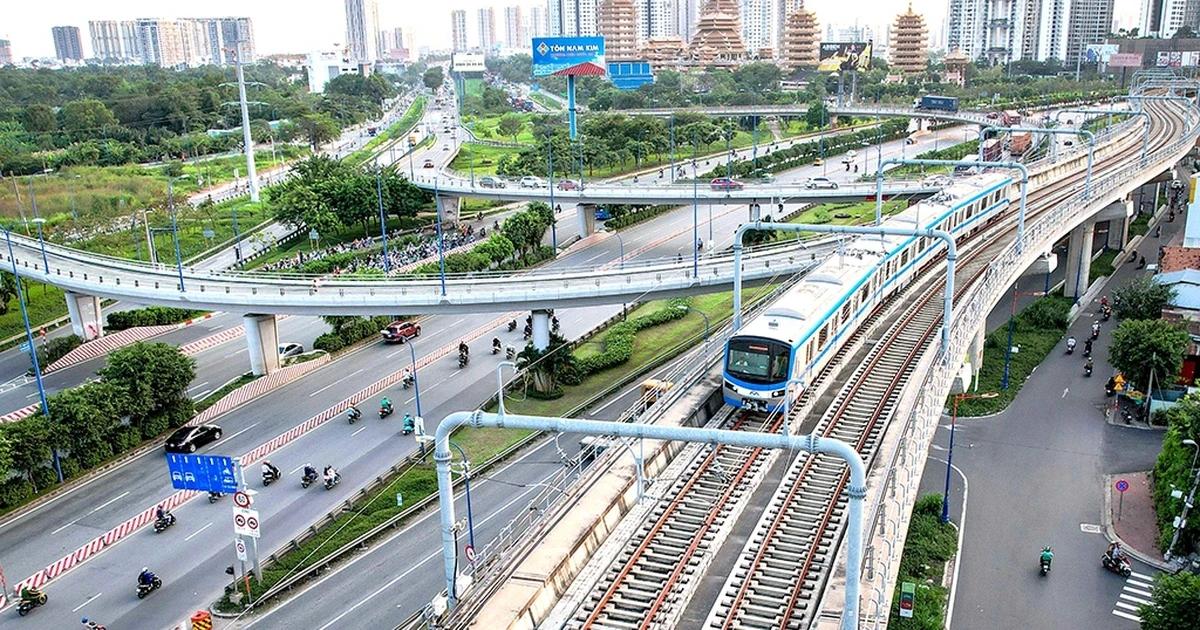
Two urban-rail lines totaling roughly 55 km that will link Ho Chi Minh City with Binh Duong are scheduled to break ground in 2026 and finish in 2030 — drawing attention as a key piece of regional transport infrastructure.
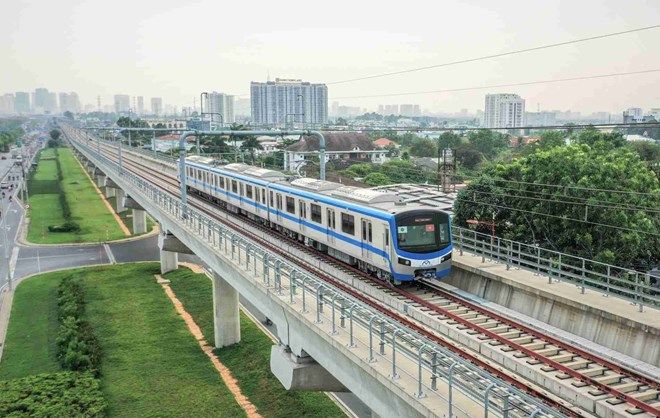
On January 17, the HCMC Urban Railway Management Authority (MAUR) announced it is fast-tracking investment procedures for two metro lines connecting Binh Duong — now part of Ho Chi Minh City — to the urban core.
These lines will play a critical role as the main transit corridors linking the urban core with the northern satellite areas.
Urban Railway Line 1 (New Binh Duong City – Suoi Tien) will run 31.6 km in total, built entirely as an elevated line.
It will start at the central station of New Binh Duong City and terminate at the Suoi Tien bus terminal station, directly connecting with the existing Metro Line 1 (Ben Thanh – Suoi Tien).
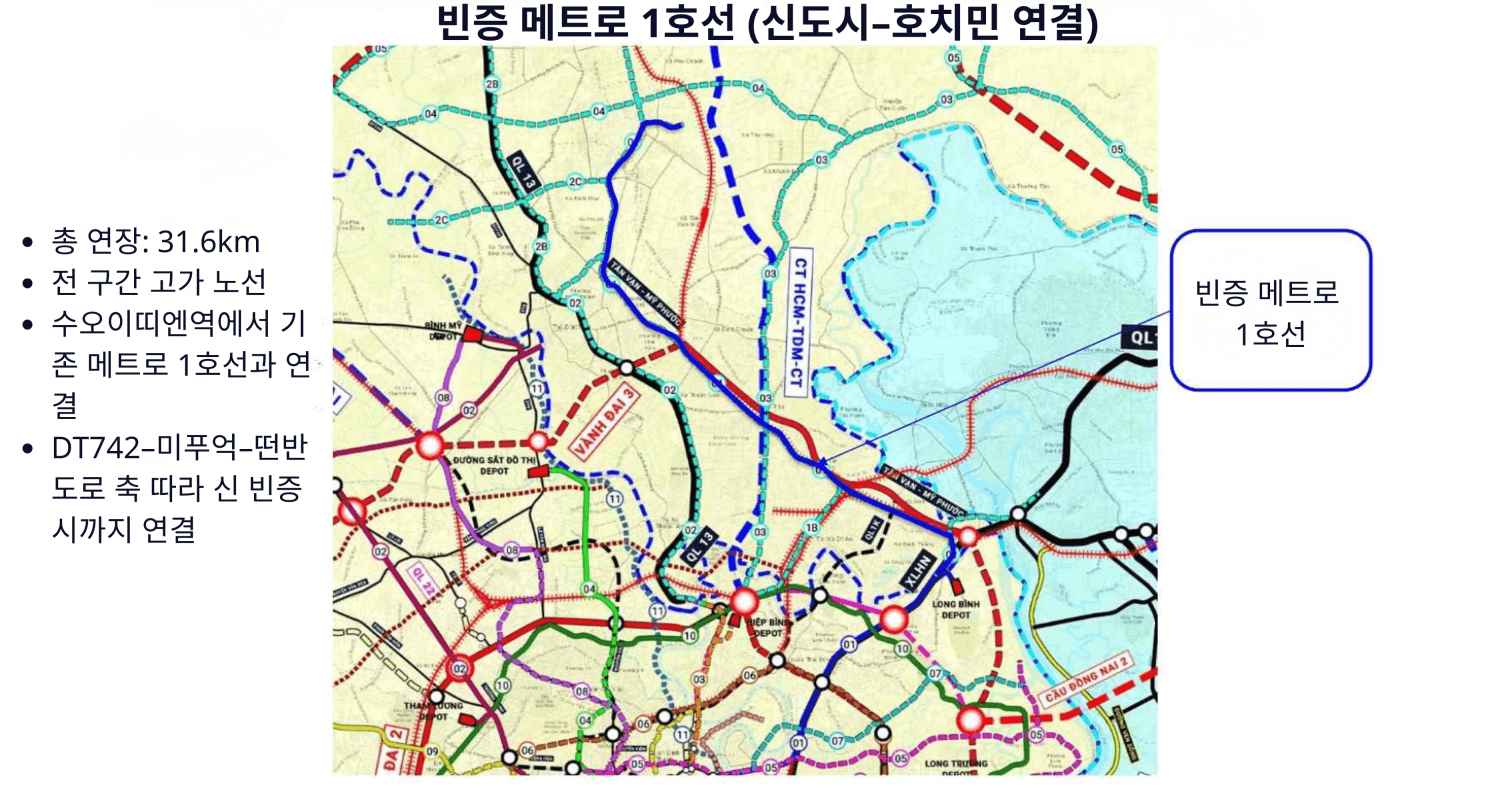
The line is planned with 17 elevated stations and will share the Long Binh depot with Metro Line 1. The total investment is estimated at about VND 46,725 billion.
According to MAUR, this line is being pursued to build a mass-transit system between the urban core and satellite cities through its connection with Metro Line 1.
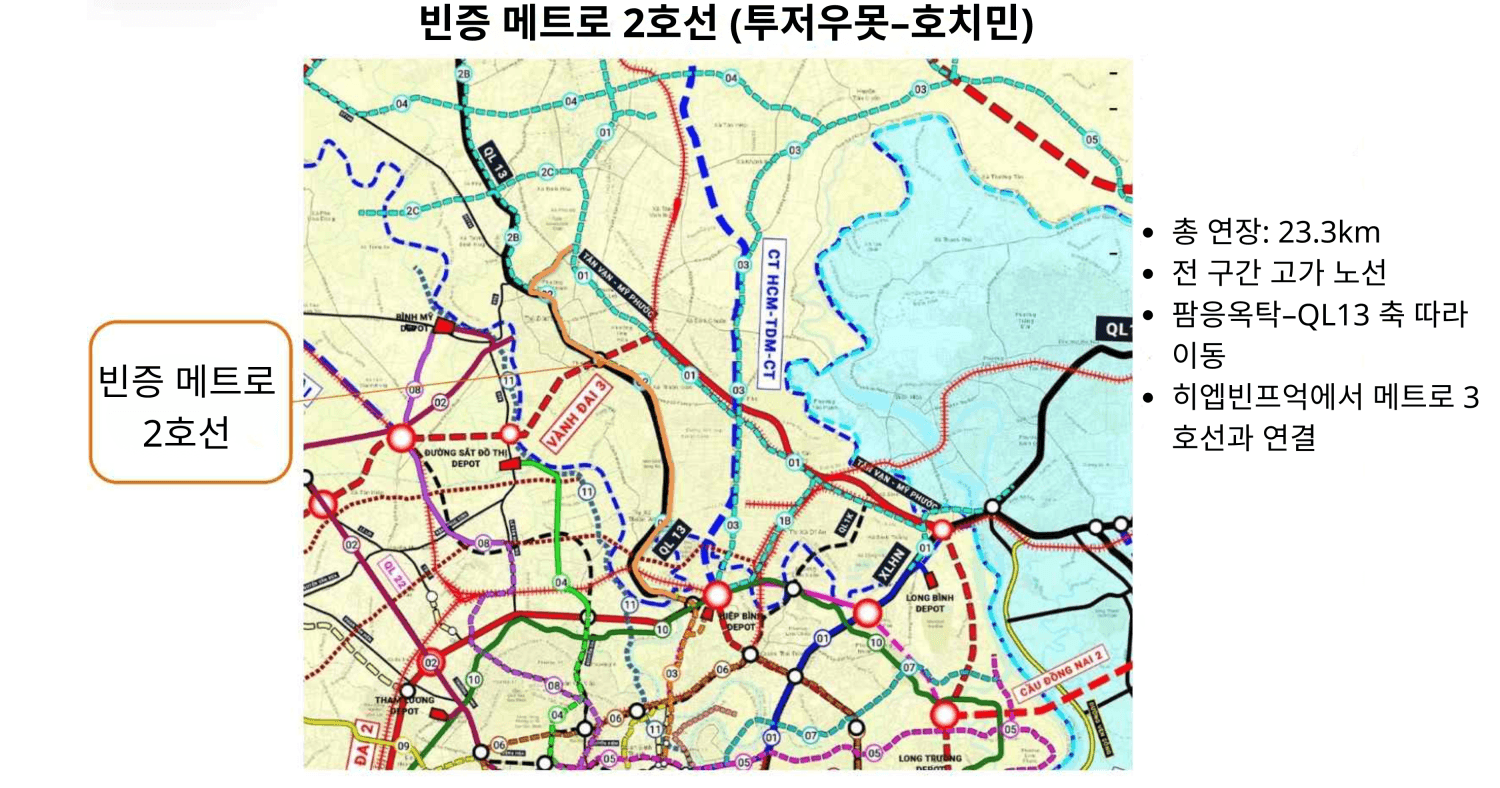
Urban Railway Line 2 (Thu Dau Mot – Ho Chi Minh City) will be 23.3 km long, also built fully elevated.
The line will start near Phu My (former Thu Dau Mot city) S5 station and terminate in the Vinh Phu area (former Thuan An city).
At its terminus it will connect with Metro Line 3 (Hiep Binh Phuoc – An Ha).
The line is planned with about 13 elevated stations and will share Metro Line 3's depot in the Hiep Binh Phuoc area. The total investment is approximately VND 53,000 billion.
Once operational, the line will link Thu Dau Mot with the HCMC urban core, ease traffic congestion on National Highway 13 and, together with Metro Line 3, form a radial transit corridor.
MAUR notes that both HCMC–Binh Duong metro lines are included in the annex to the National Assembly's Resolution 188, which applies pilot special policies to develop the urban-railway networks of Ha Noi and Ho Chi Minh City.
Applying these special policies is expected to shorten investment preparation, accelerate project execution and bring the regional metro network on stream earlier.
Dr. Tran Quang Thang, head of the HCMC Institute for Economic & Management Studies, observed that after administrative consolidation, Ho Chi Minh City is shifting from a single-center model to a multi-nuclei megacity — with metro lines set to become the backbone connecting the core with northern satellite cities such as Binh Duong.
He also noted that today most travel between Ho Chi Minh City and Binh Duong relies on National Highway 13 and the radial road network, which is already saturated. The two metro lines will deliver stable, sustainable carrying capacity that helps ease congestion, reduce accidents and curb pollution.
More broadly, the metro lines will go beyond solving transport bottlenecks — they will be a key factor reshaping the city's spatial structure after consolidation. Once in service, they will make it possible to live in Binh Duong and work in HCMC's core, shortening commutes, easing inner-city density and supporting TOD-led urban expansion.
Want a deeper market briefing?
Our research desk publishes a 40-page quarterly Vietnam Real Estate Brief. Free for qualified investors.
Request the briefMore articles
All news Indochine News
Gladia Heights: What Foreign Buyers Should Check Before Investing in Vo Chi Cong Binh Trung Thu Duc City
Updated: June 2026 Yes, foreigners can legally purchase and own residential apartments at Gladia Heights in Thu Duc City for a 50-year term, which is renewab
Read article Market News
Why Eastern Ho Chi Minh City real estate is so in demand
Metro extensions, the Thu Thiem new urban area and ring-road completions are turning HCMC East into the most investable submarket for foreign buyers.
Read article Indochine News
INDOCHINE achieves major success as northern master distributor of Happy One Mori
Happy One Mori books 98% sell-out — confirming INDOCHINE's foothold in the North on the back of strong end-user demand and clear value.
Read articleThe essentials every foreign buyer should read before reserving.