Northeastern Ho Chi Minh City – National Highway 13: a major infrastructure shift opening fresh real estate opportunities
National Highway 13 (QL13), which links Ho Chi Minh City with Binh Duong, has long served as a key arterial road of the Southern economic region. As a string of infrastructure projects — major road widening, elevated expressway construction and the planned Metro Line 3B — converge on the corridor, northeastern Ho Chi Minh City is reemerging as a new real-estate growth belt. International investors, including from Korea, are paying close attention, seeing it as a medium- to long-term capital-appreciation zone.
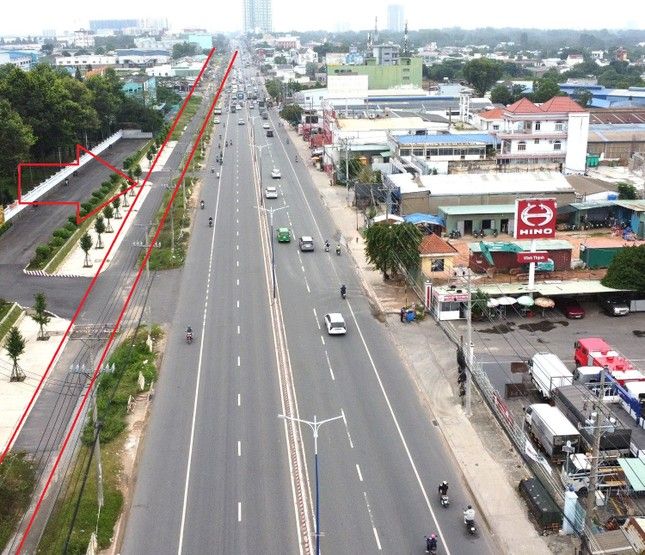
Widening National Highway 13 — the key to unlocking the northeastern 'Golden Corridor'
About 6 km of the current Ho Chi Minh City section is being widened to 8–10 lanes, and over the long term an elevated expressway is also planned — reinforcing its role as the city's 'main artery.' The Binh Duong section is already moving fast on widening to 8 lanes, upgrading sequential intersections and overhauling drainage.
As a result, travel time between northeastern Ho Chi Minh City (Thu Duc) and Binh Duong (Thuan An, Di An, Thu Dau Mot) is shortening sharply, accelerating expansion in housing, commerce and services.
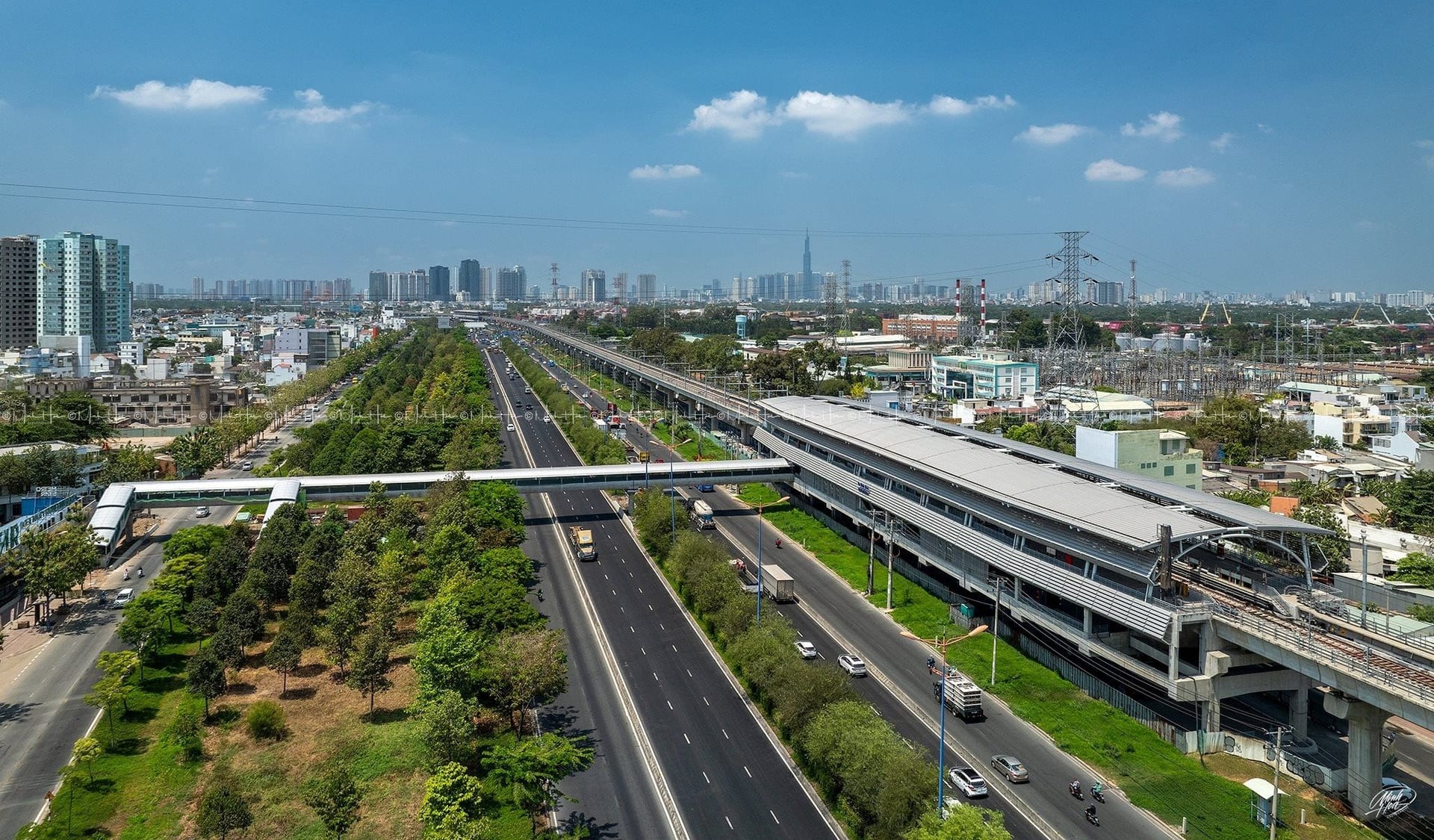
Metro Line 3B and the Binh Duong urban rail: National Highway 13 gains a 'triple-infrastructure axis'
Planned to run almost in parallel with National Highway 13, Metro Line 3B is a major route stretching from the inner city (Districts 1 and 3) through Binh Thanh and into Thu Duc (Hiep Binh Phuoc).
Binh Duong is also rolling out its own urban-rail system (12 lines planned), creating a triple public-transport axis (a TOD Zone) where National Highway 13, Metro Line 3B and the Binh Duong metro converge.
This pattern closely resembles the Seoul-style TOD (Transit-Oriented Development) model favored by Korean investors, and is highly likely to trigger commercial, business and residential mixed-use development going forward.
Population, demand and industrial structure shifts: a market underpinned by both 'real demand and foreign demand'
Binh Duong and northeastern Ho Chi Minh City are home to a high concentration of Korean and other foreign companies — including Samsung, Lotte and LG — with hundreds of thousands of experts and engineers living in the area. This drives steady growth in demand for high-end apartments and long-term rentals, which in turn supports price stability and reduces investment risk.
What was once an industrial belt along National Highway 13 is now rapidly becoming a residential, commercial and office center.
The shift from warehouse and factory districts to new towns and integrated commercial zones is a core driver of real-estate value uplift.
Why National Highway 13 real estate is in the spotlight — an investor's view
National Highway 13 — a vital arterial linking Ho Chi Minh City with Binh Duong, Binh Phuoc and the Western Highlands — directly influences surrounding property values each time related works restart, sparking investor 'front-running' behavior.
Many specialists expect that once the HCMC section of National Highway 13 is widened to 60 m, the Binh Duong section is upgraded from 6 to 8 lanes and full use begins next year, property values in the area will rise sharply.
With new supply that has clear legal status decreasing, analysts say a 10–30% price increase is fully achievable.
Industry experts say that widening and upgrading National Highway 13 is not only a key solution to easing congestion and boosting economic exchange, but also a powerful growth catalyst driving the surrounding real estate market.
Property prices generally rise in line with the pace of infrastructure development — and even faster along major economic axes and key arterial roads. Several recently launched apartment projects in Thuan An (Binh Duong) have drawn very positive buyer responses on the back of news about widening National Highway 13.
Many consumers are buying at reasonable prices now in anticipation of stronger price growth from 2025, and a rising number are signing contracts before the Tet holiday.
National Highway 13 corridor is drawing such strong investor interest because four key drivers are firing at once: pace of infrastructure delivery, the chance to replicate metro-driven value, expansion of the foreign community, and the reshaping of urban structure.
First, with National Highway 13 widening, the elevated expressway and Metro Line 3B advancing in parallel, the area is moving beyond a simple transport axis to become a regional economic corridor. This kind of layered infrastructure development creates immediate, strong upward pressure on property prices.
Second, real cases of apartments around Metro Line 1 rising 35–70% — and some by as much as 150% — show high predictability that the same 'metro-area premium' will be replicated along National Highway 13.
Third, Binh Duong and Thu Duc City — areas with a heavy presence of foreign companies such as Samsung, LG and Lotte — are seeing an expanding international community centered on Korean and Japanese residents, which strengthens long-term rental demand and residential stability.
Fourth, the area along National Highway 13 is rapidly transitioning from an industrial belt into a residential and commercial center, forming a structure where urban-expansion pace and property-value uplift move in lockstep.
Metro Line 1 as evidence of the real 'metro-area premium' — Ho Chi Minh City Metro Line 1 (Ben Thanh – Suoi Tien) has clearly proven its effect on nearby property prices.
Savills report: apartments near Metro Line 1 have risen 35–70% in price
Market research: certain areas have risen by up to 150% over 8 years
Apartments within 500 m command roughly 15% higher prices than the surrounding area
Rental markets are also expected to lift 10–15%
These data points back up the equation 'metro accessibility = price-growth potential,' and it is highly likely the same pattern will repeat along National Highway 13, where future Metro Line 3B will run.
In conclusion, this is one of those rare corridors that has all four growth engines firing simultaneously — infrastructure, demand, urbanization and a foreign-investor market — and is rated as an investment axis with reliable medium- to long-term value growth, not just short-term swings.
Want a deeper market briefing?
Our research desk publishes a 40-page quarterly Vietnam Real Estate Brief. Free for qualified investors.
Request the briefMore articles
All news Indochine News
Gladia Heights: What Foreign Buyers Should Check Before Investing in Vo Chi Cong Binh Trung Thu Duc City
Updated: June 2026 Yes, foreigners can legally purchase and own residential apartments at Gladia Heights in Thu Duc City for a 50-year term, which is renewab
Read article Market News
Why Eastern Ho Chi Minh City real estate is so in demand
Metro extensions, the Thu Thiem new urban area and ring-road completions are turning HCMC East into the most investable submarket for foreign buyers.
Read article Indochine News
INDOCHINE achieves major success as northern master distributor of Happy One Mori
Happy One Mori books 98% sell-out — confirming INDOCHINE's foothold in the North on the back of strong end-user demand and clear value.
Read articleThe essentials every foreign buyer should read before reserving.